

Category: Carbon Neutrality
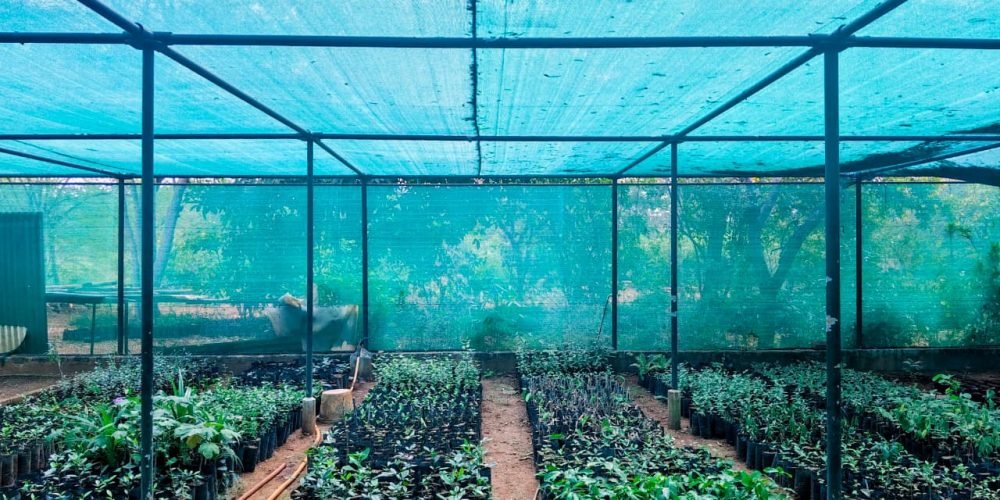
A greenhouse shed is a structure designed to grow and protect young plants in a controlled environment before they are planted in the field. By regulating temperature, humidity and light, it creates favourable conditions for seedlings to develop healthy roots and strong growth.
The greenhouse shed helps germinate and nurture many plant species, including several Ficus species, along with rare and native plants. These saplings are later used in our plantation activities, contributing to ecological restoration and greening initiatives.
Greenhouse sheds offer several advantages. They protect delicate seedlings from harsh weather conditions such as heavy rain, strong winds, and extreme heat or cold. The controlled environment helps plants grow faster and more uniformly. Since the structure is enclosed, it also reduces exposure to pests and plant diseases. Efficient watering systems such as drip or mist irrigation ensure that plants receive adequate moisture while minimising water wastage. Another important benefit is that seedlings can be grown throughout the year, regardless of seasonal changes.
As you can see from this picture taken at the Ramco Nursery located within P.A.C. Ramasamy Raja Polytechnic College, plants raised in greenhouse sheds tend to be healthier and more uniform, as the controlled environment helps seedlings develop stronger roots and more consistent growth. When they are eventually transplanted into the field, their chances of survival are significantly higher. In this way, greenhouse sheds play a vital role in producing strong saplings that support successful plantation efforts and sustainable environmental initiatives.
