

Category: Water Body Restoration
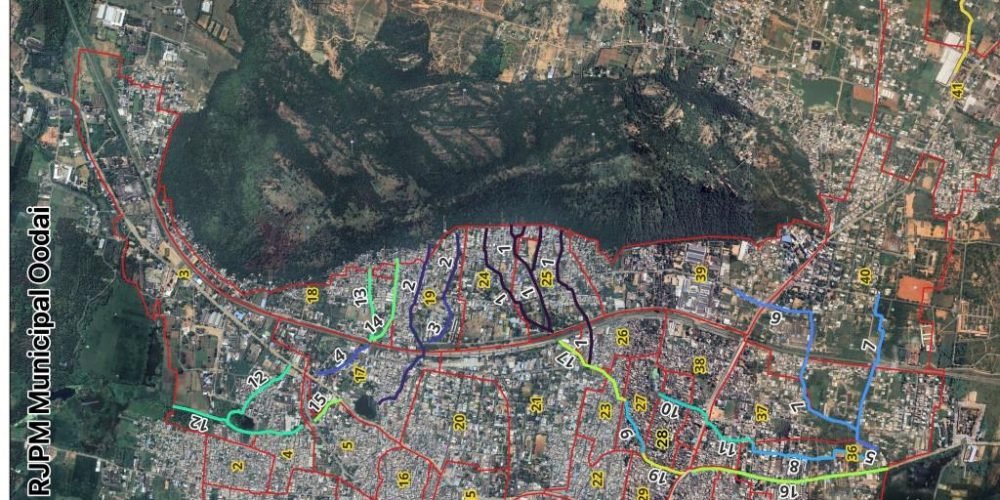
A botanical team from Ramco Community Services recently conducted a field study of streams originating from Sanjeevi Hills and flowing through different parts of Rajapalayam city, to document the floral diversity present along the streams, assess the presence of native and invasive species, and understand their ecological impact on freshwater ecosystems and connected water bodies within the city limits.
During the study, nearly 40 plant species were recorded. Among them, the following three species were identified as invasive: Leucaena leucocephala (Subabul / Suba pul), Prosopis juliflora (Seemai Karuvelam), and Eichhornia crassipes (Aagayath Thaamarai or Water Hyacinth).
Experts involved in the initiative noted that invasive species can spread rapidly, suppress native vegetation, and disturb the ecological balance of stream environments. In particular, seeds and plant fragments carried downstream may enter ponds, tanks, and other water bodies in the city, enabling the invasive plants to establish and spread further.
The team observed that Prosopis juliflora, a thorny invasive tree species, and Leucaena leucocephala, a fast-growing exotic species, can dominate stream banks and reduce native biodiversity. Eichhornia crassipes, an aquatic invasive plant, can choke water bodies, reduce oxygen levels, and affect aquatic life.
The findings are expected to support future ecological restoration and conservation efforts aimed at protecting native habitats and improving the environmental health of urban freshwater systems.
