

Category: Water Body Restoration
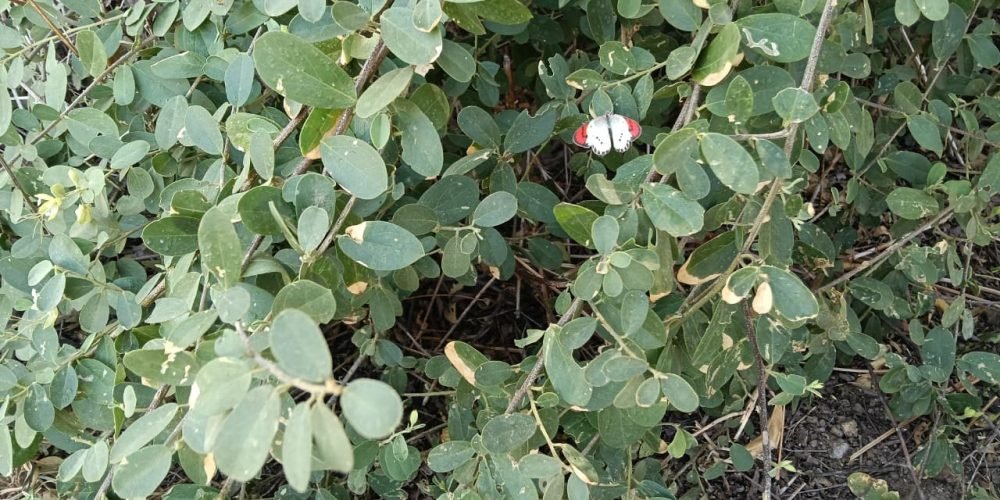
The sighting of a Crimson Tip butterfly at the restored Vettai Perumal Kanmai highlights the growing ecological value of the restored waterbody and its surrounding habitat. The butterfly, scientifically known as Colotis danae, is commonly called the Crimson Tip or Indian Crimson-tip, and is known in Tamil as கருஞ்சிவப்பு நுனிச்சிறகான்.
A member of the Pieridae family, the Crimson Tip is a small to medium-sized butterfly recognised by its predominantly white wings and distinctive crimson-red markings towards the tips of the forewings. The species is found in Tamil Nadu and several other parts of India, particularly in dry and open habitats.
The presence of the butterfly is closely linked to the availability of its host plants. The caterpillars primarily feed on plants belonging to the Capparaceae family, including Cadaba fruticosa, Capparis divaricata, Capparis sepiaria, Maerua oblongifolia and Maerua cylindrocarpa. The availability of such native plants is therefore important for sustaining breeding populations of the species.
Like other butterflies, the Crimson Tip undergoes a complete metamorphosis, passing through four distinct stages, egg, caterpillar, pupa and adult. The female lays eggs on suitable host plants, where the caterpillars feed and develop through successive larval stages. They then pupate before emerging as adult butterflies.
The species is generally associated with dry scrub, open woodland, dry deciduous vegetation and other open habitats where its host plants are available. Adult butterflies feed primarily on flower nectar, making flowering plants an important part of their habitat.
The sighting at Vettai Perumal Kanmai is significant because butterflies can serve as useful indicators of habitat quality and biodiversity. The Crimson Tip contributes to flower visitation and pollination, while its eggs, caterpillars and adults form part of the wider food web. Its presence also adds to the diversity of butterfly species that can be supported by a healthy and restored landscape. The sighting of Colotis danae at the restored Vettai Perumal Kanmai also shows that maintaining suitable host plants and flowering vegetation helps make restored landscapes more attractive to butterflies and other pollinators.