

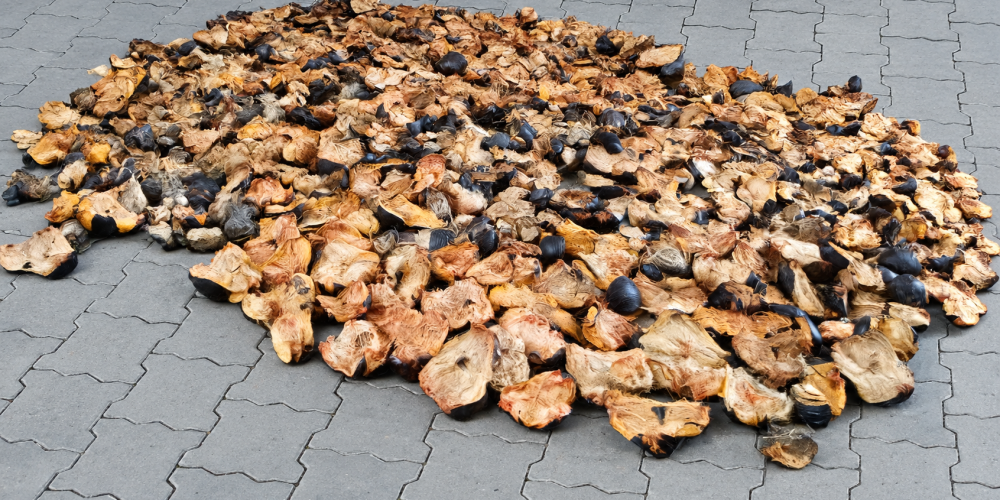
“Do not throw me. I am not a refuse—I am a towering palm waiting to rise.” –Startling story of a Palmyra Seed
Category: Environment
A ripe Palmyra fruit falls to the earth with a quiet thud. Sheltered within its flesh lies a single seed, dormant yet holding the future of one of Tamil Nadu’s most and illustrious trees. For centuries, the Palmyra Palm (Borassus flabellifer), known affectionately as the Panai Maram (பனைமரம்), has protected our soil, nurtured rural livelihoods, and shaped our cultural heritage.
Every great journey begins modestly. The journey of a palmyra begins by gathering these fallen, sun-ripened seeds from the forest floor. Yet, before this humble seed can accomplish its destiny, it asks for your care.
- First, Cleanse Me: Gently strip away the fibrous outer pulp and residue, unveiling the clean core beneath.
- Next, Let Me Rest: Dry the seeds in the shade to draw out excess moisture, shielding them from rot and decay until planting season arrives.
- Finally, Give Me a Home: Bury them deep along the embankments of lakes, ponds, and irrigation tanks, letting the coming monsoon rains entice life from the soil.
From there, witness a quiet miracle unfold:
Seed → Sprout → Palm → Protector
As the Palmyra matures, its deep, resolute roots bind the earth, strengthen water bunds and prevent soil erosion. In return for our patience, it gives back generously—yielding cooling nungu (tender ice apples), sweet palm fruit, refreshing padaneer (sweet sap), unrefined jaggery, and durable fiber.
In regions like Rajapalayam, the seasonal rhythm is clear: nungu arrives with the summer heat from March to June, while the rich, ripe fruit follows in late August and September.
The next time you encounter a discarded Palmyra seed, remember: what appears to be the end of a seasonal harvest is, in truth, the beginning of a living forest.
To sum up:
“Every fallen seed is a part of the forest waiting to flourish.”