

Category: Greening Sanjeevi Hills
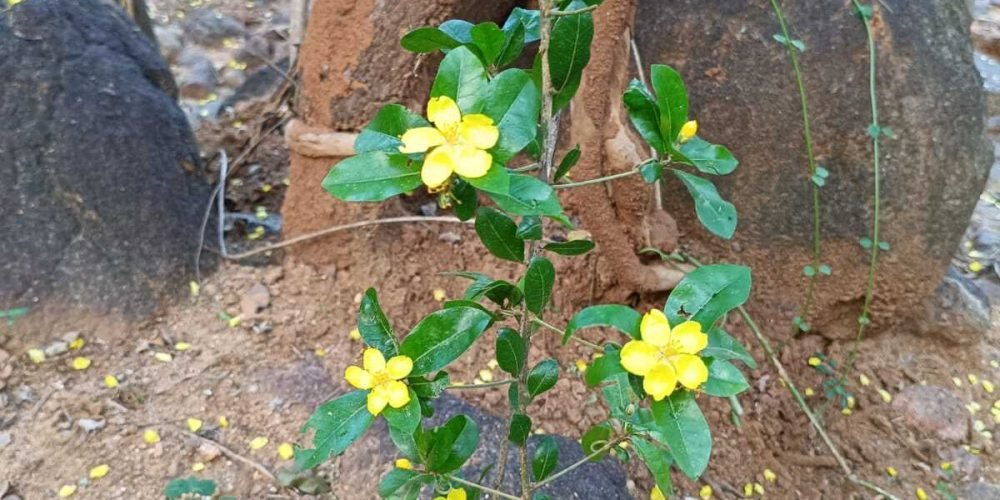
A flowering specimen of Hugonia mystax L., commonly known as Climbing Flax, was photographed in the Sanjeevi Malai area, a region with rich plant diversity. Belonging to the Linaceae family, the species is a woody climber commonly found in dry landscapes.
The plant bears small to medium-sized yellow flowers and is native to India and Sri Lanka. It typically occurs in dry deciduous forests and scrub forest ecosystems, where it forms an important climbing component of the natural vegetation.
Ecologically, Climbing Flax plays a supportive role in forest biodiversity by providing nectar for insects and contributing to soil stabilisation in dry and erosion-prone areas. As a climber, it integrates with surrounding vegetation, adding structural diversity to forest habitats.
The plant also holds significant value in traditional medicine, particularly in folk bone-setting practices. Stem and root pastes are commonly applied externally to aid in the healing of bone fractures, sprains, and joint injuries. It is also known for its anti-inflammatory properties and is used to reduce swelling, pain, and inflammation.
Traditional remedies prepared from the plant are applied to wounds, cuts, bruises, and ulcers to promote faster healing. Additionally, it is used in the management of muscle and joint pain, including rheumatism, and is believed to strengthen bones and muscles when applied externally.
