

Nestled at the eastern edge of Rajapalayam, the sacred Sanjeevi Malai (also known as Sanjeevi Hills) is a modest hillock covering roughly 400 acres. Infused with mythic significance from the Ramayana, it is believed to be a fragment of the Himalayas dropped by Lord Hanuman while carrying the life-restoring mountain of herbs. The hill supports a lush tract of indigenous forest, diverse flora and fauna, ancient rock paintings, and atop, stands the revered Murugan temple, making it a spiritual retreat, ecological haven, and popular trekking destination.Four rain‑fed ponds will further enhance groundwater recharge, provide wildlife habitats, and contribute to sustainable water management. RCS has submitted a detailed DPR and is actively facilitating the project’s implementation.
Ramco Community Services (RCS), in partnership with the Tamil Nadu government’s Boomi Dhan Board, is now spearheading an Eco Park development project on a 44‑acre stretch at the foothills of Sanjeevi Malai. Designed to bolster biodiversity and community engagement, the park will feature approximately 2,500 trees from 43 indigenous South Indian species such as Neem (Azadirachta indica), Indian Laburnum (Cassia fistula), Banyan (Ficus benghalensis), and Indian Gooseberry (Phyllanthus emblica).
With the Eco Park expected to significantly increase Rajapalayam’s urban green cover, it will serve as the city’s ecological “lungs”, akin to the Amazon’s role globally. The park offers quiet pockets for public relaxation, shaded trails for leisure, and interpretive zones where students and visitors can learn about native plants, wildlife, and environmental stewardship. In doing so, it furthers the city’s carbon neutrality goals and fosters a deeper connection between residents and nature.
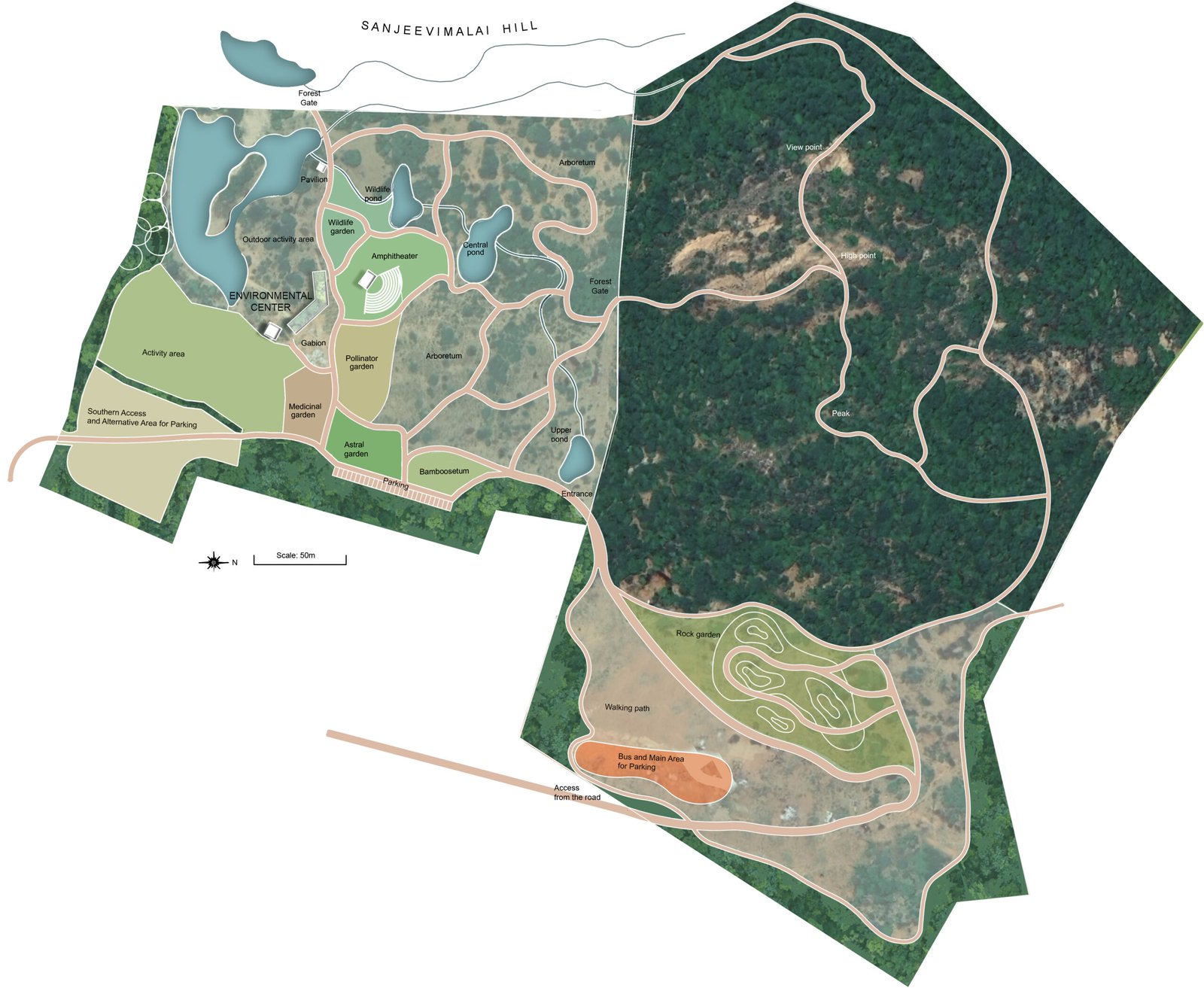
Ramco Community Services (RCS), in partnership with the Tamil Nadu government’s Boomi Dhan Board, is now spearheading an Eco Park development project on a 44‑acre stretch at the foothills of Sanjeevi Malai. Designed to bolster biodiversity and community engagement, the park will feature approximately 2,500 trees from 43 indigenous South Indian species such as Neem (Azadirachta indica), Indian Laburnum (Cassia fistula), Banyan (Ficus benghalensis), and Indian Gooseberry (Phyllanthus emblica). Four rain‑fed ponds will further enhance groundwater recharge, provide wildlife habitats, and contribute to sustainable water management. RCS has submitted a detailed DPR and is actively facilitating the project’s implementation.
