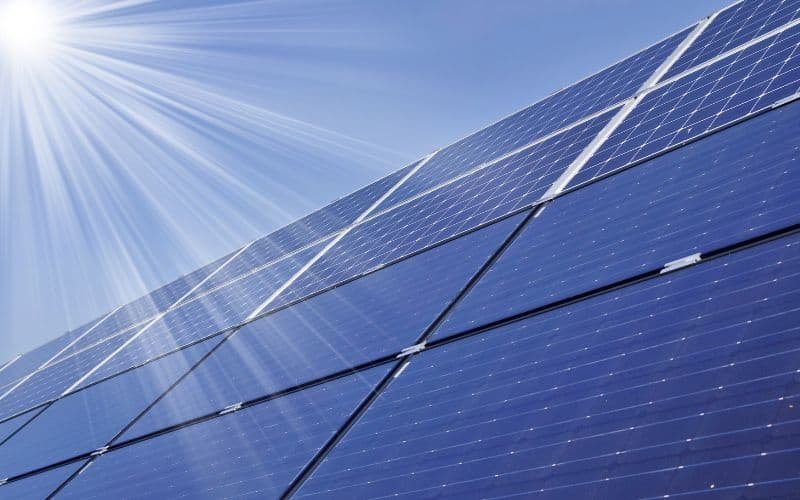
The generation and consumption of electricity are among the leading contributors to greenhouse gas emissions in urban areas. Transitioning to renewable energy sources, especially solar power, is crucial for any city aiming to achieve carbon neutrality. Solar energy reduces dependency on fossil fuels, offers clean and sustainable power, and aligns with both environmental goals and long-term energy security. Over the past five years, the Rajapalayam Local Planning Area (LPA) has seen an average annual electricity consumption of around 550 GWh (textile and heavy industries account for approximately 70% of the electricity and energy consumption in the region). However, as of 2021, solar energy contributes only 13.54 GWh (only 6% of households use solar energy) revealing a vast untapped potential.
RCS has also assessed the feasibility of Floating Photovoltaic (FPV) systems on Rajapalayam’s 42 water bodies, covering 19.85 sq. km. If 20–30% of the surface area is used, FPV could generate between 263.10 MW and 394.65 MW of clean energy without occupying land. Through this integrated approach, Rajapalayam is well on its way to becoming a solar-smart, carbon-neutral city, and a model for others to follow.
To boost adoption, RCS is conducting booth camps across the city to inform residents and businesses about solar schemes, subsidies, and the installation process. It is also preparing to launch a dedicated online portal to provide access to policy details, vendor listings, and guidance—all aimed at making solar adoption easy, transparent, and widespread.