

Category: Environment
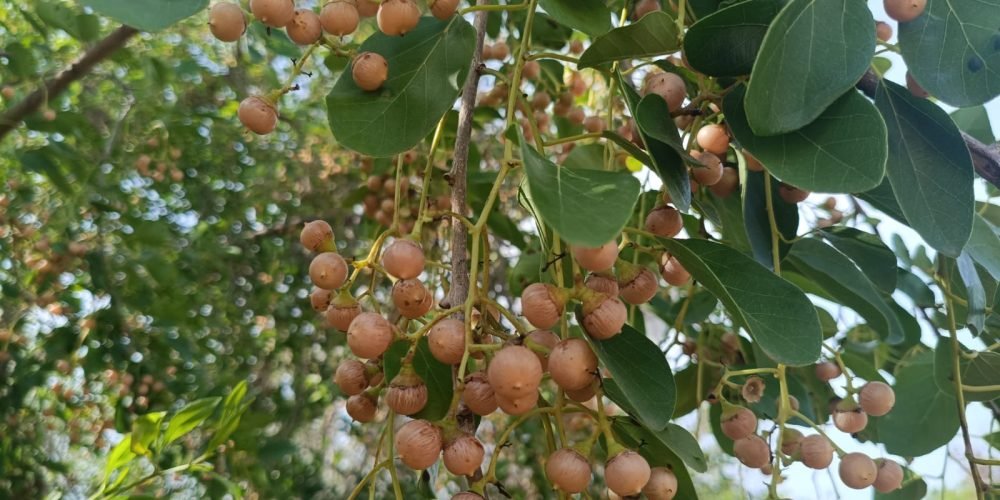
This photograph taken in the Sanjeevi Malai Eco Park area has brought attention to an interesting native tree, commonly known as the Indian cherry or Clammy cherry. Scientifically identified as Cordia dichotoma / Cordia domestica, the species belongs to the Boraginaceae family and is known by several names in Tamil, including நறுவல்லி (Naruvalli), நறுவீழி (Naruveeli) and விரிசு (Viricu). It is also known as the Bird lime tree in English.
The tree has long been valued in traditional systems of medicine, including Ayurveda, Siddha and Unani, as well as in local folk practices. Different parts of the plant have traditionally been used for a variety of internal and external ailments.
The mucilaginous pulp of the fruit has traditionally been used as a demulcent and expectorant to soothe coughs, sore throats and other chest complaints. Preparations made from the bark and fruit have also been used traditionally for digestive ailments such as dyspepsia, diarrhoea, dysentery and stomach discomfort.
The plant has also found applications in traditional skin and wound care. Leaf pastes and powdered bark have been used locally for ulcers, boils, swellings and certain skin eruptions. Poultices prepared from fresh leaves have traditionally been applied to help relieve headaches and localised inflammation.
Interest in the plant extends beyond its traditional uses. Research into its phytochemical composition has identified compounds such as flavonoids, triterpenoids and phenolic acids, along with significant amounts of polysaccharide mucilage. Experimental studies have investigated its potential anti-inflammatory, antimicrobial, antioxidant and wound-healing properties. These findings represent pharmacological potential and should not be taken as proof of clinical effectiveness.
Beyond its medicinal associations, Cordia species can have ecological value as part of native vegetation. Cordia domestica may be considered for native-species planting, biodiversity areas and dryland landscaping, provided that the species is correctly identified and confirmed to be suitable for the particular soil, rainfall and ecological conditions of the site.
The presence of such species in and around the Sanjeevi Malai Eco Park area highlights the importance of recognising and conserving native plant diversity. Trees that may appear ordinary at first glance can carry centuries of traditional knowledge while also contributing to the ecological character of a landscape.