

Category: Environment
“The Clipper: “Small White Windows, Big Impact: Safeguard Butterfly Habitats.”
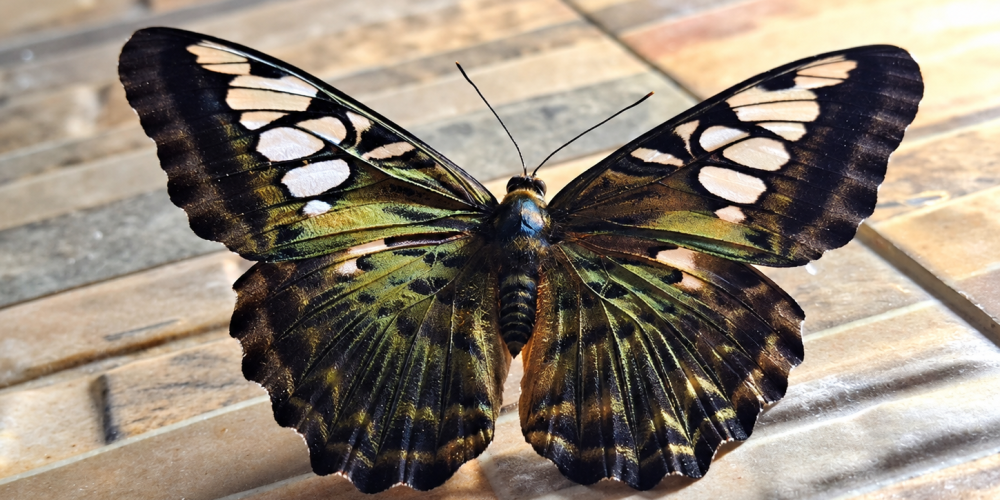
What if a butterfly could leave a lasting impression in just a few seconds? You may see it flutters past, catch a glimpse of its beautiful wings and then suddenly—it’s gone! That is the magic of the Clipper Butterfly, a swift and fascinating creature photographed in the Ponnagaram area.
CLIPPER AT A PEEK
Quick Fact Details
- Common name Clipper Butterfly
- Scientific name Parthenos sylvia
- Family Nymphalidae
- Wingspan About 100–125 mm
- Habitat Forests and vegetation-rich areas
- Found in South and Southeast Asia, including Tamil Nadu
- Special feature White or translucent “window-like” markings
- Flight Fast flyer with periods of gliding
- Caterpillar food plants Tinospora sinensis, Zanonia indica, Adenia hondala
- Interesting behaviour Male butterflies may practise puddling to obtain minerals
The Clipper butterfly is an eye-catching species known for the remarkable design on its wings. Its white or transparent markings can look like small windows when sunrays pass through them, while various subspecies display additional beautiful shades and patterns. With a wingspan of 100–125 mm, this fast, powerful flier alternates between rapid wingbeats and smooth gliding, offering nature photographers an exciting challenge to capture it on camera.
Like other butterflies, the Clipper undergoes a complete transformation from egg to caterpillar, caterpillar to pupa, and finally to an adult butterfly. During their caterpillar stage, they depend entirely on specific host plants such as Tinospora sinensis, Zanonia indica, and Adenia hondala.
Male Clippers exhibit an interesting behaviour called puddling, where they gather on damp soil or moist surfaces to absorb water and essential minerals. So, the next time you see butterflies gathered around a wet patch of ground, look closely. They may not simply be resting—they could be refilling minerals to their lives.
The presence of the Clipper in regions like Tamil Nadu highlights the importance of protecting native plants, trees, and green habitats, as every butterfly plays a role in a larger ecological network. Observing a butterfly’s movement, wing patterns, and surrounding plants offers a gentle lesson in patience and curiosity.
In short:
A Clipper may fly past in seconds, but the wonder it leaves behind can last much longer.
“The Clipper Butterfly: Windows to Nature’s Wonders.”