

Category: Greening Sanjeevi Hills
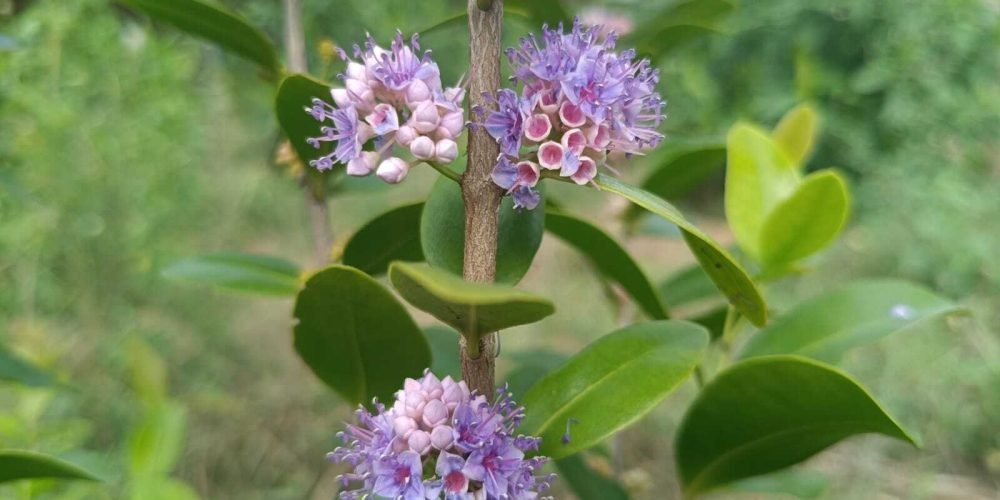
This photograph shows Memecylon umbellatum, a native evergreen tree species of peninsular India, growing in the garden at Ātmaprasāra. Commonly known as the Ironwood Tree, the species is known locally in Tamil as Anjani (அஞ்சனி) or Kasiram (காசிரம்). It belongs to the family Melastomataceae and is valued for both its ecological significance and ornamental beauty.
Anjani is a small to medium-sized tree that typically grows between 5 and 15 metres in height. It can be identified by its small, opposite, thick, glossy green leaves and clusters of brilliant blue to violet flowers, which make it one of the most distinctive native trees of the region. The tree also bears small, round berries that ripen to a purple-black colour.
Native to India, Sri Lanka, and other parts of South and Southeast Asia, Memecylon umbellatum is commonly found in dry evergreen forests, coastal forests, and rocky hill slopes. In India, it occurs widely across the Western Ghats, Eastern Ghats, and coastal regions of the peninsula, where it contributes significantly to local biodiversity.
The species plays an important ecological role. Its flowers attract bees and other pollinators, while its fruits are consumed by birds that help disperse its seeds. It is generally propagated through seeds, with fresh seeds showing better germination rates. The tree thrives in well-drained soils and requires moderate watering during its establishment phase. These characteristics, combined with its attractive flowers and value to wildlife, make Memecylon umbellatum an excellent choice for eco-parks, arboretums, biodiversity gardens, and native tree plantations.
