

Category: Underground Sewage System
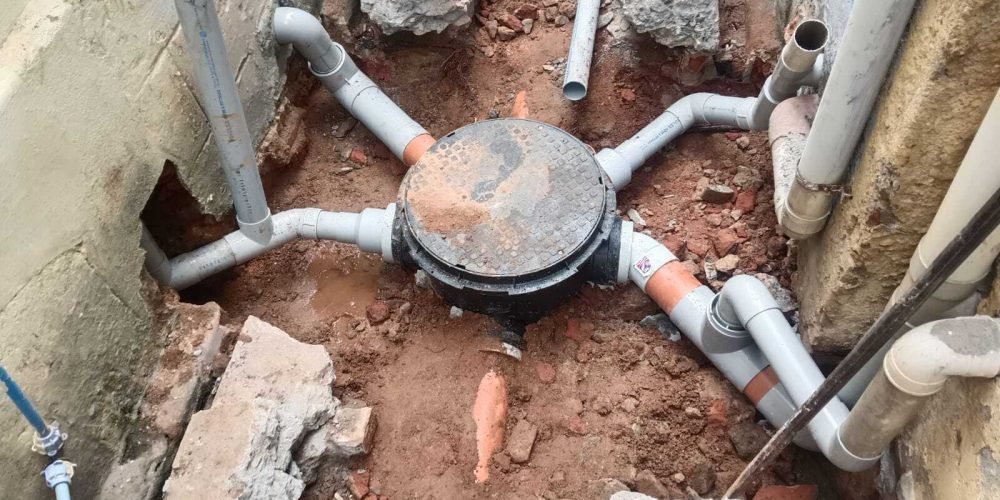
Ramco Community Services has installed an innovative plastic-based underground sewerage system in a narrow three-foot-wide lane at Sakkaraja Kottai, showcasing a practical solution for providing household sewer connections in congested areas in the city. The team completed drain line connections for 11 houses, fixed chamber covers, refilled excavated soil, and carried out compaction works. Subsequent testing confirmed smooth wastewater flow through the system, highlighting its effectiveness even in highly constrained spaces.
The demonstration comes at a time when Rajapalayam is witnessing the implementation of its UGSS project, which involves laying underground main sewer lines and constructing chambers outside houses to collect and channel wastewater into the municipal sewer network.
While the project has been progressing successfully across the city, laying conventional concrete sewer lines and constructing cement chambers can pose significant technical challenges in narrow streets and lanes. The space required for excavation, construction, and maintenance often limits the feasibility of extending sewer connectivity to such areas.
To address these challenges, plastic-based sewer infrastructure made of polypropylene is emerging as a promising alternative. The prefabricated main sewer lines and chambers are durable, lightweight, cost-effective, and require considerably less time and manpower for installation. Their compact design enables sewer connections to be provided even in very narrow lanes where conventional systems may be difficult to implement.
Another advantage of the system is the quality of the finished street surface. Unlike traditional masonry chambers, whose covers often protrude above road level and create inconvenience for pedestrians and two-wheeler riders, the plastic chambers can be installed flush with the street surface, resulting in a smoother and safer roadway.
The successful demonstration at Sakkaraja Kottai has highlighted the potential of the technology to support faster and more inclusive sewerage network expansion, particularly in areas where space constraints have traditionally posed challenges to underground sewerage projects.
