

Category: Eco Park
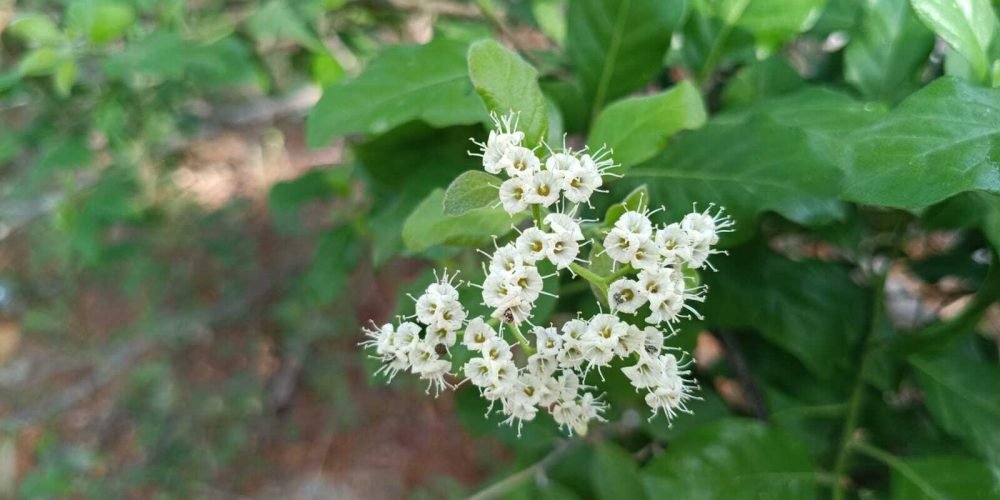
This tree, scientifically known as Ehretia laevis, is a hardy indigenous species that thrives in dry deciduous forests and rocky hill landscapes. The species is among the native flora found in the Sanjeevi Malai Eco Park.
Belonging to the Boraginaceae family, Ehretia laevis grows to a height of 8-15 metres. It is characterised by its greyish-brown bark with shallow cracks, and rough oval leaves with toothed margins. Its clusters of small, fragrant white flowers bloom between March and May. The tree bears small edible fruits that ripen from orange to black, providing an important food source for birds and other wildlife.
Native to India and other parts of South Asia, the tree plays a valuable ecological role by attracting bees, butterflies and birds, thereby supporting local pollinators and wildlife. Because of its resilience and adaptability, it is increasingly recognised as an ideal species for afforestation programmes, biodiversity parks and ecological restoration projects.
Apart from its ecological significance, Ehretia laevis has several traditional uses. Its leaves are used as fodder for livestock, while its wood is valued for making agricultural implements, tool handles and fuelwood. Various parts of the tree, including the bark, leaves and fruits, have also been used in traditional medicine for treating minor wounds, cough, digestive disorders and inflammation, although such uses are not a substitute for modern medical care.
The presence of Ehretia laevis at the Sanjeevi Malai Eco Park serves as a reminder of the importance of conserving native tree species that not only enrich the landscape but also sustain local biodiversity and strengthen ecological resilience.